

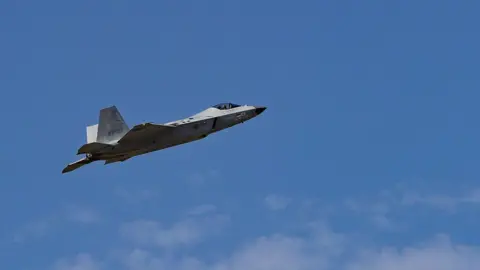
South Korea has filed a protest with the Chinese and Russian military representatives based in the country, following their warplanes flew into its air defence zone.
South Korean authorities stated it scrambled fighter jets to "take tactical measures in anticipation of any contingencies" after seven Russian and two Chinese warplanes "flew into the zone on Tuesday, but clarified they "did not encroach upon" South Korea's sovereign air territory.
Some countries establish air identification defence zones, wherein they mandate foreign planes to identify themselves. These zones do not constitute part of national air territory under international law.
Details of the Aerial Encounter
The Russian planes entered the Korean ADIZ near Dokdo and Ulleung Island, while the Chinese aircraft entered near the Ieodo area, a military official said.
The aircraft from both nations then reassembled in the sky near Japan's Tsushima, the official continued.
"Our military will actively respond to aerial movements from neighbouring countries in the Kadiz in compliance with international law," the nation's military authorities affirmed.
Underlying Territorial Tensions
Both Japan and South Korea have asserted sovereignty over the Dokdo islets, as has the Democratic People's Republic of Korea.
Ieodo - a submerged rock above the Jeju Island - is a source of disagreement between Seoul and Beijing, each of whom have included it in their respective ADIZs.
The Sino-Russian Response
China on the following day stated that its military aviation had conducted a combined aerial patrol with Moscow in the East China Sea and Western Pacific region.
The operation was part of an "yearly collaborative schedule" between Beijing and Moscow to "respond to localised threats and uphold peace and security in the region," said a military spokesperson.
Russia and China have entered into South Korea's air defence zone without prior notice on multiple instances since 2019, frequently amid similar exercises.
Moscow does not acknowledge the Korean ADIZ, describing it as "unilaterally created" and maintaining it should therefore not establish binding rules for other nations.


