

In a Dutch government television initiative titled "Flip the Switch" an actress alerts audience members about their electricity usage.
"Whenever we all consume electricity at the same time, our power grid gets overloaded," she states. "It can cause failures. So, employ as minimal energy as feasible between 4 and 9 PM."
This represents a indication that, in one of the highly developed economies in the world, something has gone wrong with the nation's electricity provision.
EV Adoption and Green Energy Expansion
Holland has been an enthusiastic adopter of EVs. It boasts the greatest number of EV stations per person in the European continent.
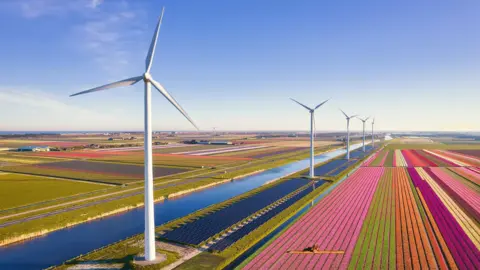
Regarding electricity production, the Netherlands has replaced natural gas from its large North Sea resources with solar and wind.
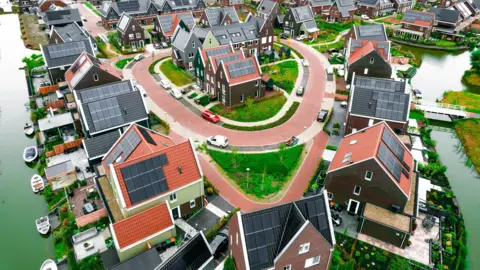
So much so that it pioneers the way in the region for the amount of solar panels per person. Actually, over one 3rd of Netherlands households have solar panels installed.
The country is also aiming for offshore wind energy parks to be its biggest provider of power by the year 2030.
Network Overload Issues
While this is all positive in environmental terms, it's putting the Netherlands' power network under significant pressure, and in the past few years there have been a number of power cuts.
The problem is "network overload", explains Kees-Jan Rameau, chief executive of a Dutch power company and provider.
"Network overload is similar to a traffic jam on the electricity network. It's caused by either excessive power demand in a particular region, or too much power supply put onto the grid, beyond what the grid can handle."
The expert clarifies that the problem is that the network "was created in the days when we had only a few of very large, primarily gas-powered power plants".
"So we built a grid with very big power lines close to those power plants, and increasingly thinner cables as you got closer to the residences.
"Currently we're switching to green energy, and that means there's a significant power being injected into the grid in the periphery of the system where there are only relatively limited cables."
And these small power lines are struggling to cope with the substantial power coming in from wind generators and solar panels distributed around the country.
Specialist Assessment and European Situation
Damien Ernst, academic of electrical engineering at a European university, is among Europe's top experts on electricity grids. He says it is an expensive problem for the Netherlands to resolve.
"They have a grid crisis because they didn't put money sufficiently in their distribution networks, in their transmission networks, so they are experiencing bottlenecks throughout, and it will take a long time and many billions of dollars to solve this."
Prof Ernst notes that it is a Europe-wide issue. "We have an vast quantity of solar panels being deployed, and they are installed at a rate that is significantly excessive for the network to be able to handle."
Management Solutions and User Effects
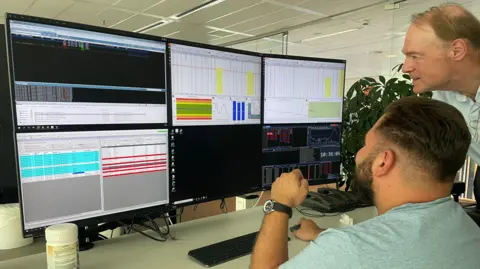
Within a leading power provider's main office in Rotterdam, executives highlight a large monitoring system that the company calls its "virtual power plant" and "the brain of our activities". It is employed to assist in stabilize the network, avoiding blackouts.
When electricity generation is too high throughout the Netherlands, it enables energy companies to rotate wind turbines out of the breeze and turn off PV systems.
Regarding situations where consumption for electricity is peak, it lowers the power to customers who have accepted to permit energy companies to stop or limit their electricity supply when the grid is under strain in return for reduced prices.
But for households and businesses who wish to scale-up their use of energy with a new or larger power link, that, increasingly, is simply not feasible.
"Often consumers want to install a heat pump, or charge their electric vehicle at home, but that needs a significantly larger power connection, and progressively they just cannot obtain it," says the energy executive.
The official continues that it is more challenging for businesses. "Often they aim to grow their activities, and they simply cannot get extra capacity from the network managers.
Moreover it has got to the point where including new housing construction in the Netherlands is becoming increasingly challenging, because there's just no available power to connect those developments to the grid."
Those individuals, and companies, find themselves on queues for a number of years. At the same time there are also backlogs for those who wish to supply the network with energy, such as a recently built house fitted with PV systems on its roof.
Economic Consequences and Long-term Strategies
The government-owned agency that manages the Dutch power network reports that eight thousand companies are currently waiting to be able to feed in power, while 12,000 additional entities are queuing for permission to consume more power.
Certain sectors of the Dutch economy are warning that it is hindering their growth. "Network overload is placing the long-term viability of the Dutch chemical industry at jeopardy… while in other countries it will be more straightforward to put money," says the Head of a leading industry association.
Therefore, was this situation preventable? "Looking back I think almost every issue is avoidable," comments the energy executive.
He adds that after the 2015 Paris Agreement on trying to tackle climate change, "we were heavily focussing on increasing the renewable power generation aspect. But we somewhat underestimated the impact it would have on the electricity network."
The grid operator is currently preparing to invest 200 billion euros on strengthening the network, including installing some 100,000 kilometers of new cables between the present and 2050.
That's a huge amount of money, but there is also a substantial cost to not spending it. Network overload is costing the Dutch economic system up to 35 billion euros a annually, according to a recently published report from a management consultancy firm.
An experienced representative in charge of network issues says that understanding is sadly necessary. "In order to improve and reinforce the grid, we need increase twofold, threefold, occasionally expand tenfold the power handling of the current grid.
"Furthermore it's requiring on typical about 10 years to


